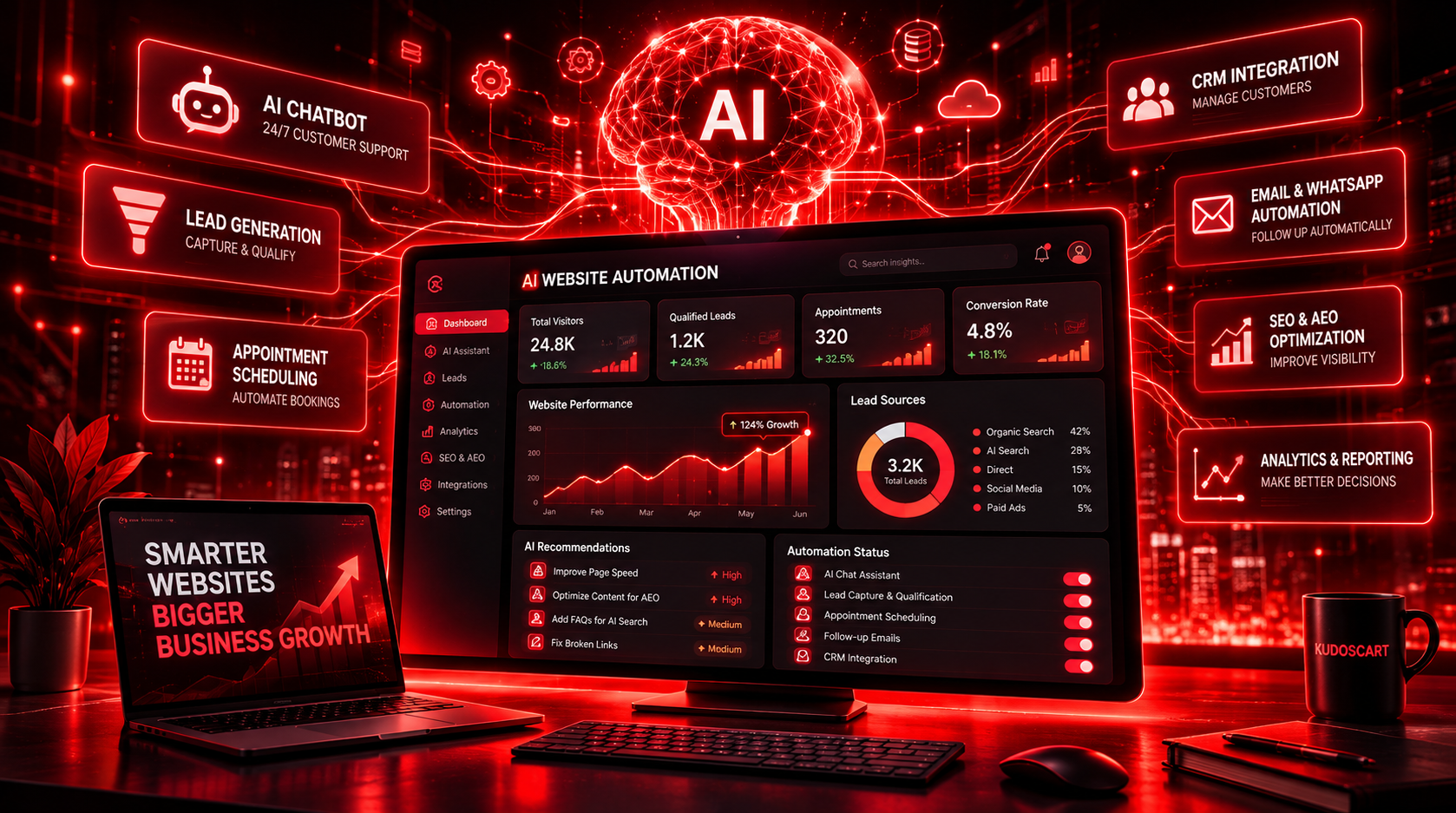
Discover how AI-powered website audits, SEO automation, and Answer Engine Optimization (AEO) can transform your website into a powerful business growth engine.
In today’s competitive digital landscape, simply having a website is no longer enough. Your website needs to be fast, technically sound, search-engine friendly, and optimized for AI-driven discovery.
With search engines becoming smarter and AI-powered platforms changing how customers discover businesses, regular website audits have become essential.
An AI-powered website audit helps businesses identify hidden technical issues, improve search visibility, enhance user experience, and uncover opportunities for sustainable growth.
At KudosCart, we believe websites should do more than look impressive. They should attract visitors, generate qualified leads, and support measurable business growth.
An AI-powered website audit is a comprehensive evaluation of a website’s performance, technical health, SEO readiness, content quality, and accessibility to search engines and AI systems.
Unlike traditional manual audits, AI-assisted auditing tools can analyze multiple pages, organize findings, identify patterns, and help prioritize improvements.
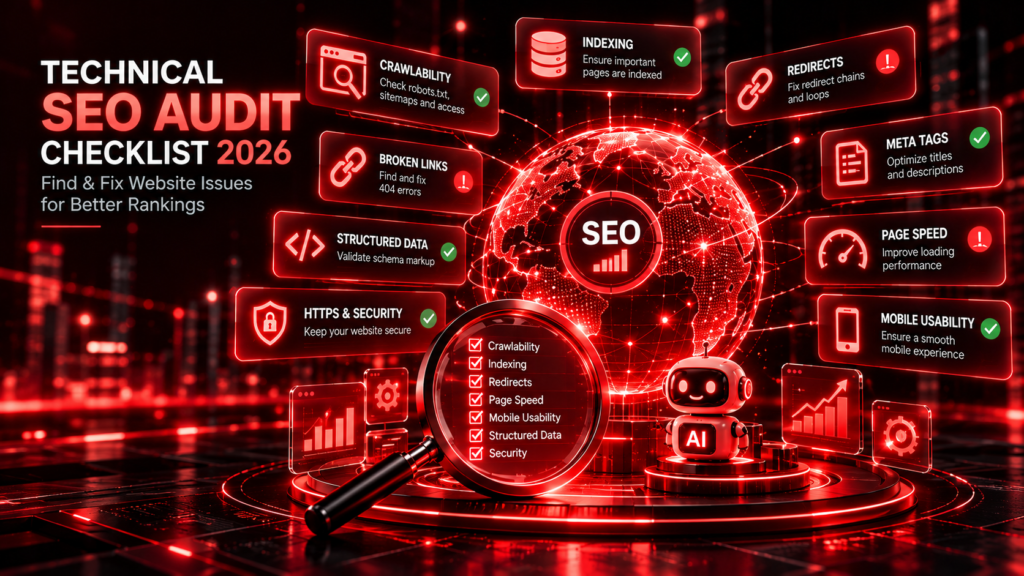
A comprehensive audit typically examines:
Technical SEO: Crawlability, indexing, redirects, canonical tags, and structured data.
Website Performance: Page speed, Core Web Vitals, and mobile usability.
On-Page SEO: Meta titles, descriptions, headings, internal links, and content structure.
Answer Engine Optimization (AEO): Content clarity, entities, FAQs, and AI crawler accessibility.
Website Quality Assurance: Broken links, missing images, usability issues, and form functionality.
Competitor Analysis: Keyword opportunities, content gaps, and competitive positioning.
Conversion Optimization: Calls to action, landing-page effectiveness, and lead-generation opportunities.
Search behavior is evolving.
Customers are increasingly using AI-assisted search experiences and conversational tools to research products, compare services, and discover solutions.
This means businesses need to optimize their websites for both traditional search engines and AI-powered discovery.
| Traditional SEO | Answer Engine Optimization |
|---|---|
| Improves search engine rankings | Improves content readiness for AI-generated answers |
| Focuses on keywords and links | Focuses on questions, entities, and context |
| Optimizes titles and metadata | Optimizes clear, direct answers |
| Builds organic search visibility | Supports discovery through AI search experiences |
| Tracks clicks and search performance | Evaluates answer coverage and AI visibility opportunities |
The future of website optimization is not SEO versus AEO. It is SEO and AEO working together.
Technical errors, missing metadata, poor internal linking, and indexing issues can prevent important pages from performing well in search results.
Regular audits identify these problems and help businesses improve their search engine accessibility.
Slow-loading websites can frustrate visitors and reduce engagement.
A website performance audit identifies oversized images, inefficient scripts, layout instability, and other performance bottlenecks.
AI search systems benefit from accessible, well-structured, understandable content.
An AEO audit evaluates whether your website provides clear answers, meaningful headings, structured information, and trustworthy business details.
Broken links, duplicate pages, redirect errors, missing canonical tags, and crawl restrictions can affect website performance.
Automated crawling makes these issues easier to discover across multiple pages.
Traffic alone does not guarantee business growth.
An effective audit also examines whether visitors can easily understand your services, trust your business, and take the next step.
Competitor analysis can reveal missing topics, content weaknesses, and opportunities to create more helpful resources than competing websites.
Instead of making random website changes, businesses can use audit findings to prioritize improvements based on severity, potential impact, and implementation effort.
AI automation is changing how businesses monitor and improve their websites.
Rather than manually reviewing every page, automated tools can help teams detect recurring issues and organize actionable recommendations.
Key applications include:
Automated multi-page website crawling
Technical SEO issue detection
Content structure analysis
Schema markup validation
AEO readiness assessments
Broken-link identification
Competitor content comparisons
Prioritized optimization recommendations
Exportable audit reports
Automation helps reduce repetitive work, while human expertise remains important for validating findings and deciding which changes make business sense.
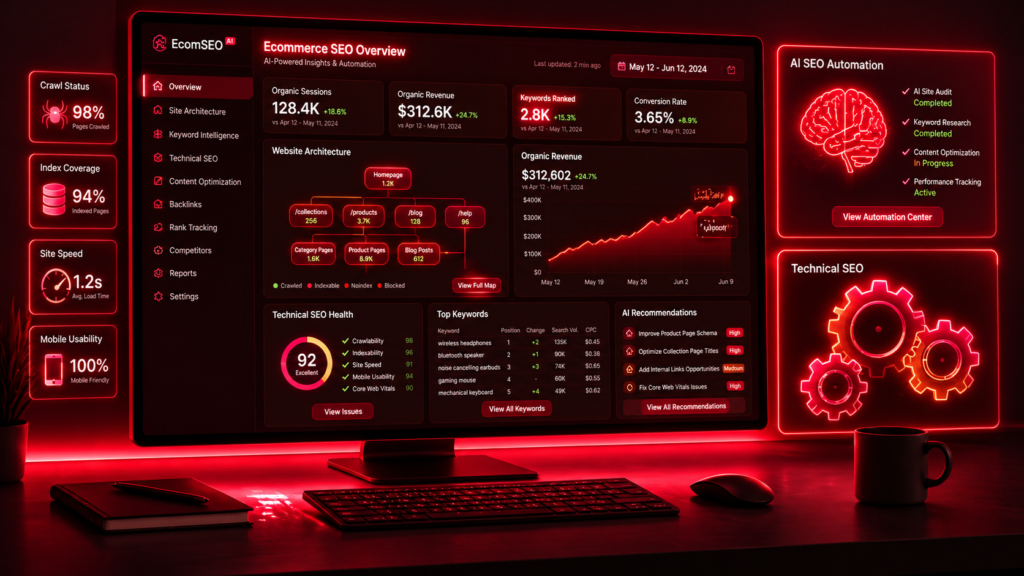
A centralized website audit dashboard brings important performance indicators into one place.
Businesses can monitor metrics such as:
Website Health Score: An overview of technical findings and website quality.
Crawl and Indexing Status: Whether important pages are accessible and eligible for search engine indexing.
Page Performance: Loading speed, mobile responsiveness, and Core Web Vitals.
SEO Opportunities: Missing metadata, heading issues, duplicate content, and internal linking improvements.
AEO Readiness: Structured content, schema, answer coverage, and AI crawler accessibility.
Prioritized Recommendations: Which issues should be investigated and addressed first.
A well-designed dashboard makes complex technical information easier to understand and act upon.
At KudosCart, we’re developing Bliss Rank AI, an AI-powered website auditing solution designed to bring essential website optimization capabilities into one unified platform.
Our vision is to make website audits more accessible, organized, and actionable for business owners, marketers, SEO professionals, and agencies.
The product’s planned capabilities cover five important areas:
Website Audit: Website architecture, crawlability, and technical health.
SEO Analysis: On-page and technical search optimization.
Advanced AEO: AI search readiness, structured answers, entities, and content optimization.
Website QA: Broken links, content quality, and website functionality checks.
Competitor Intelligence: Competitive website analysis and improvement opportunities.
By bringing these areas together, Bliss Rank AI aims to help businesses spend less time switching between tools and more time improving their websites.
Explore Bliss Rank AI: https://kudoscart.com/blissrankai/
The ideal audit frequency depends on your website’s size, complexity, and update schedule.
| Website Type | Suggested Audit Frequency |
|---|---|
| Small business website | Every 2–3 months |
| Corporate or service website | Monthly |
| E-commerce website | Weekly or monthly |
| Frequently updated content website | Monthly |
| Newly launched or redesigned website | Before and after launch |
Major website updates, migrations, or unexpected traffic declines should also trigger additional audits.
Finding issues is only the beginning.
The real value comes from converting audit insights into improvements that support business objectives.
An effective optimization process follows five steps:
Audit → Analyze → Prioritize → Implement → Monitor
For example, fixing broken internal links can improve navigation, while restructuring service-page content may make information easier for both visitors and search engines to understand.
Similarly, improving page speed and simplifying contact forms can help reduce friction in the customer journey.
The goal is not simply to achieve a high audit score. It is to create a website that performs better for real users and supports business growth.
The digital landscape is evolving rapidly, and businesses need websites that can adapt.
AI-powered website audits offer a practical way to identify technical weaknesses, improve search visibility, strengthen content quality, and prepare for AI-driven discovery.
Whether you’re managing a small business website, an e-commerce store, or multiple client websites, regular auditing should be part of your digital growth strategy.
At KudosCart, our focus is on combining AI-powered technology, website optimization, and strategic consulting to help businesses transform their online presence into a growth system.
Discover how Bliss Rank AI can support your website auditing and optimization workflow.
Explore Bliss Rank AI: https://kudoscart.com/blissrankai/
Visit KudosCart: https://kudoscart.com/
Smarter Websites. Stronger Visibility. Sustainable Growth.