The future of search is changing. Discover how Search Engine Optimization (SEO) and Answer Engine Optimization (AEO) work together to help businesses stay visible in an AI-driven digital world.
Imagine a potential customer looking for the best dental clinic, digital marketing agency, or business consultant.
A few years ago, they might have typed a short keyword into Google, browsed several websites, and compared their options.
Today, that same customer might ask ChatGPT:
“Which dental clinic near me offers the best combination of services and patient care?”
Or ask Google:
“What should I look for when choosing a digital marketing agency for my small business?”
Instead of browsing multiple websites, users may receive AI-generated summaries and recommendations.
This shift is changing how businesses approach online visibility.
Traditional SEO helps websites compete in search results. AEO helps make content easier for AI-powered answer systems to understand and use.
In 2026, businesses should consider both.
Search Engine Optimization, commonly known as SEO, is the process of improving a website’s visibility in organic search results.
SEO helps search engines discover, understand, index, and rank relevant website content.
Technical SEO: Website crawling, indexing, sitemaps, canonical tags, and redirects.
On-Page SEO: Page titles, meta descriptions, headings, keywords, and internal linking.
Content Optimization: Helpful, relevant, original content that satisfies search intent.
Website Performance: Fast loading, mobile usability, and good page experiences.
Authority Building: Earning relevant links, mentions, and signals of credibility.
Local SEO: Improving visibility for location-based searches.
A dental clinic wants to rank for “Dental Implants in Gurgaon.”
Traditional SEO efforts may include creating a dedicated service page, optimizing headings and metadata, improving local business information, and building useful supporting content.
These improvements help search engines understand the clinic’s services and relevance.
However, ranking in traditional search results is only one part of modern digital discovery.
Answer Engine Optimization, or AEO, focuses on making website information easy for answer-generating systems to find, interpret, and potentially reference.
These systems include AI-powered search experiences and conversational assistants.
AEO emphasizes:
Clear answers to common customer questions
Well-organized headings and content
Accurate, verifiable information
Consistent business and brand details
Meaningful entities and relationships
Relevant structured data
Accessible website content
Trustworthy sources and expert insights
Instead of creating a page that only targets “Dental Implants in Gurgaon,” a clinic might also answer:
How long does a dental implant procedure take?
A clear answer could explain that treatment duration varies depending on the patient’s needs, the procedure, and the healing process.
The page could then provide additional information about consultation, treatment stages, and aftercare.
This format helps both visitors and search systems understand the topic.
Important: AEO does not guarantee that ChatGPT or another AI platform will mention, cite, or recommend a website.
It improves content clarity and readiness for AI-powered discovery.
Although SEO and AEO share many best practices, their emphasis differs.
| SEO | AEO |
|---|---|
| Focuses on organic search visibility | Focuses on answer-oriented discovery |
| Optimizes pages for search queries | Optimizes information for conversational questions |
| Uses keywords and search intent | Emphasizes context, entities, and clear answers |
| Measures rankings, impressions, and clicks | Evaluates answer coverage and AI visibility |
| Improves crawling and indexing | Builds on technical accessibility and content clarity |
| Supports traditional search results | Supports AI-assisted search experiences |
Neither should replace the other.
SEO provides a strong technical and content foundation, while AEO builds on that foundation to support emerging search experiences.
A website with excellent answers but poor crawlability may struggle to be discovered.
Similarly, a technically optimized website with unclear or unhelpful content may miss opportunities to satisfy conversational queries.
The strongest approach combines SEO, AEO, and a high-quality user experience.
Different AI-powered platforms use different methods to discover, retrieve, and present information.
Some rely on traditional search indexes. Others use web retrieval, licensed data, or additional information sources.
Not every answer is generated from a live website search.
However, several website characteristics can support discoverability.
Search systems need access to relevant pages.
Incorrect robots.txt rules, blocked resources, and server errors may prevent crawlers from accessing important information.
Descriptive headings, readable paragraphs, meaningful links, and logical page organization help systems interpret information.
Outdated or misleading information can reduce usefulness and credibility.
Consistent information about your business, services, locations, and expertise helps establish context.
Clear authorship, reliable references, accurate contact details, and transparent business information help visitors evaluate your website.
Businesses should avoid assuming that adding a particular schema type or FAQ automatically produces AI citations.
Identify the questions customers ask before purchasing your services.
For example:
What does a website audit include?
How much does website optimization cost?
What is the difference between SEO and AEO?
How can AI improve lead generation?
Answer these questions clearly and accurately.
Organize content using logical H1, H2, and H3 headings.
Each section should communicate a specific topic rather than relying on vague or promotional language.
Use appropriate schema markup to describe supported information such as organizations, services, products, articles, and business details.
Structured data should accurately reflect visible page content.
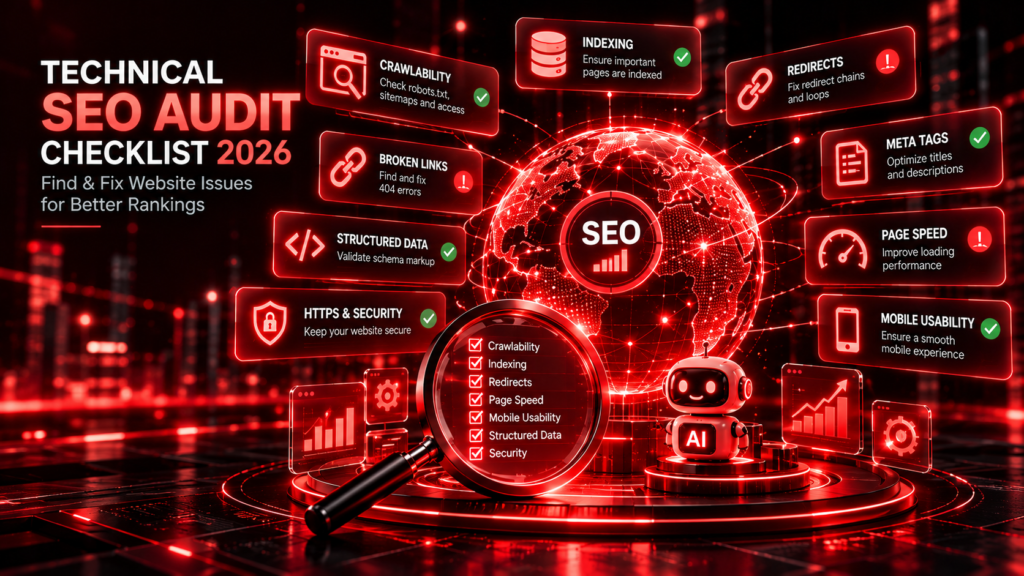
Check for crawl errors, broken links, duplicate content, missing canonical tags, and incorrect redirects.
A technically healthy website provides a stronger foundation for search visibility.
Display accurate contact information, service descriptions, professional credentials where relevant, and genuine customer testimonials.
Avoid unsupported claims and fabricated reviews.
Create content based on actual customer needs and your business expertise.
Original examples, practical guidance, and firsthand insights can make your content more useful.
People often interact with AI assistants using complete questions.
Instead of focusing exclusively on short keywords, cover the broader questions surrounding a topic.
Connect related articles, services, and resources through descriptive links.
For example, a blog about SEO and AEO can link to a website audit guide and a relevant auditing solution.
Understand which crawlers can access your website and whether your access settings match your business objectives.
Different AI services have different crawlers and policies, so permissions should be reviewed individually.
Review search performance, technical issues, content quality, and relevant AI search visibility observations.
Use these findings to improve your website over time.
AI-powered discovery does not eliminate the importance of technical SEO.
In fact, many foundational SEO practices remain essential.
Consider a website with excellent content but the following problems:
Important pages accidentally marked noindex
Broken internal links
Incorrect canonical URLs
Poor mobile usability
Slow-loading service pages
Blocked crawlers
Duplicate content across multiple URLs
These issues can limit how effectively content is discovered and used.
Regular technical audits help identify such problems before they affect broader website performance.
Manually evaluating every page of a growing website can be time-consuming.
AI-assisted auditing tools can help organize technical findings, identify content opportunities, and simplify reporting.
A comprehensive website auditing process should cover five areas:
Website Health: Crawlability, page structure, broken links, and technical issues.
SEO Performance: Metadata, headings, internal links, indexing signals, and content optimization.
AEO Readiness: Question-answer coverage, schema, entities, semantic structure, and AI crawler accessibility.
Website Quality Assurance: Missing resources, content problems, and functional checks.
Competitor Analysis: Comparing relevant content, technical practices, and search visibility opportunities.
AI-generated recommendations should still be reviewed before implementation, especially when they involve technical configuration or important business content.
At KudosCart, we’re developing Bliss Rank AI, an AI-powered website auditing solution designed to help businesses and digital professionals analyze their websites more efficiently.
Our vision is to bring website auditing, SEO, advanced AEO, website quality assurance, and competitor intelligence together into a unified experience.
Bliss Rank AI is designed around a practical goal:
Make website optimization easier to understand, prioritize, and act upon.
Whether you’re a business owner, SEO consultant, digital marketer, or agency, having organized audit insights can support better optimization decisions.
Explore Bliss Rank AI:
https://kudoscart.com/blissrankai/
Search will continue to evolve as AI becomes more integrated into how people discover and evaluate information.
Businesses should prepare for a digital environment where customers may interact with search results, AI summaries, conversational assistants, and traditional websites during the same buying journey.
The most sustainable strategy is not to chase every new optimization trend.
Instead, focus on:
Technically accessible websites
Helpful, accurate content
Clear business information
Strong topical relevance
Positive user experiences
Regular website monitoring
Continuous improvement
These principles support both established search practices and emerging AI discovery opportunities.
No. AEO complements SEO. Technical accessibility, content quality, and traditional search optimization remain important.
ChatGPT may discover information through supported search and retrieval mechanisms, depending on the experience and available sources. Visibility or citation is not guaranteed.
Relevant structured data can help machines understand certain types of information, but it does not guarantee inclusion in AI-generated answers.
Small businesses can benefit from clear, useful, question-focused content, especially when customers research services through conversational search.
A monthly review is a useful starting point for many active business websites. More frequent checks may be appropriate after major changes or for larger websites.
AI-assisted tools can automate parts of website analysis, reporting, and issue prioritization. Human review remains important for accuracy and implementation.
The way customers search for information is changing, but the fundamentals of a successful website remain clear.
Businesses need technically sound websites, useful content, credible information, and an excellent user experience.
SEO helps build visibility in search engines.
AEO helps prepare content for answer-oriented discovery.
Together, they form a stronger foundation for digital growth.
At KudosCart, we focus on AI-powered websites, optimization, automation, and strategic consulting to help businesses create smarter digital experiences.
Explore Bliss Rank AI and discover our approach to website auditing, SEO, and AEO optimization.
Explore Bliss Rank AI: https://kudoscart.com/blissrankai/
Discover KudosCart: https://kudoscart.com/
Smarter Websites. Stronger Visibility. Sustainable Growth.